
For decades, news about the vaquita (Phocoena sinus) has become increasingly disheartening as the number of animals has declined year after year. Now there is new hope, as the latest estimate of the vaquita population in the upper Gulf of California in Mexico has revealed that the current population of the species stands at 10 to 13 individuals, including one or two calves. This means that, compared to previous surveys, no additional animals have been lost; in fact, the population may have grown by a few individuals. It is important to note that these figures are estimates.
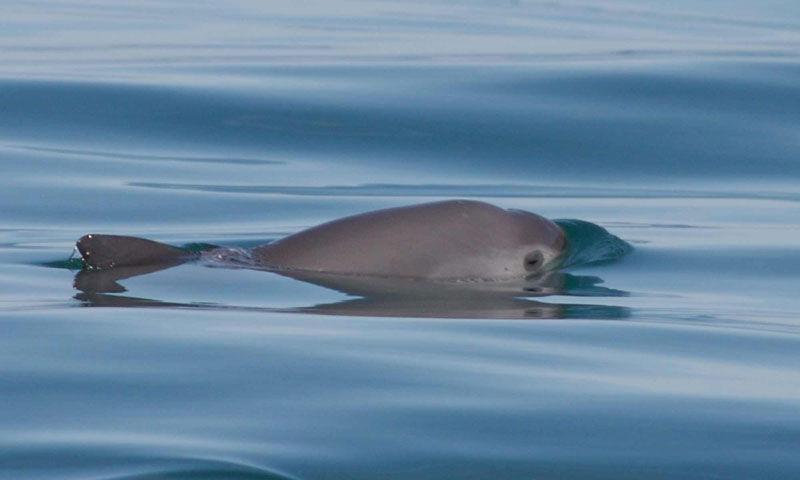
The survey was conducted by the Cetacean Specialist Group of the International Union for Conservation of Nature (IUCN) in May 2023 in the Gulf of California (https://iucn-csg.org/wp-content/uploads/2023/06/Vaquita-Survey-2023-Main-Report.pdf).
The vaquita population has declined to a critical level, primarily due to illegal fishing for shrimp and totoaba, another critically endangered species. It is important to note that between 1997 and 2008, the vaquita population declined from 567 to 245 individuals. Later, from 2008 to 2015, the vaquita’s annual decline rate rose from 8% to 45%. The most recent estimate, from 2021, assumed that there were only seven or eight adult vaquitas and one or two calves remaining.
To save the vaquita from extinction, fishing was banned in a so-called “zero-tolerance zone” in the northern part of the Gulf of California, but illegal fishing still takes place there. In August 2022, the Mexican Navy deployed 193 concrete blocks in the area, each equipped with three-meter-high metal hooks designed to snag nets. In addition, the Mexican Navy has collaborated with the Sea Shepherd Conservation Society and other organizations to closely monitor fishing activity, which has led to a 90 percent reduction in fishing within the zero-tolerance zone, according to the study.
“The concrete blocks, combined with enforcement within the ZTA, appear to be an effective means of preventing the use of gillnets,” according to the IUCN report. “Based on this year’s results, expanding the use of concrete blocks and hooks to other areas where vaquitas are known to forage is an urgent priority.”
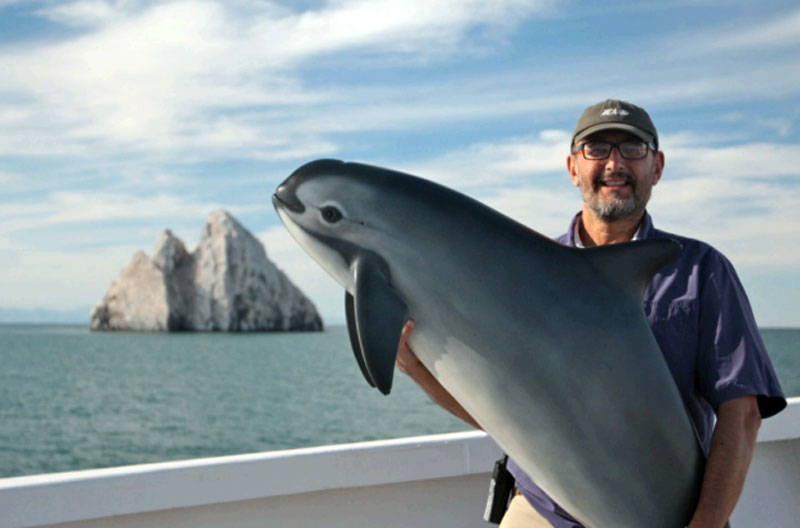
It is equally important to find solutions for fishermen who need to find a way to make a living. The nongovernmental organization Pesca Alternativa de Baja California (Pesca ABC) is dedicated to finding such solutions by developing alternative fishing techniques that do not use gillnets and by helping fishermen create markets for their vaquita-friendly seafood products.
For seven years, YAQU PACHA and the Nuremberg Zoo have been supporting various NGOs—such as Vaquita CPR, Pesca ABC, and Museo de la Ballena—that work tirelessly to protect the vaquita. This is therefore a first ray of hope for all of us—the first in decades—and one that is ultimately thanks to the perseverance of the many people who are committed to protecting the vaquita. It would be wrong to say that the vaquita is saved; we are still a long way from that. Rather, it is important to use this news as an opportunity to continue working toward the protection of the species.