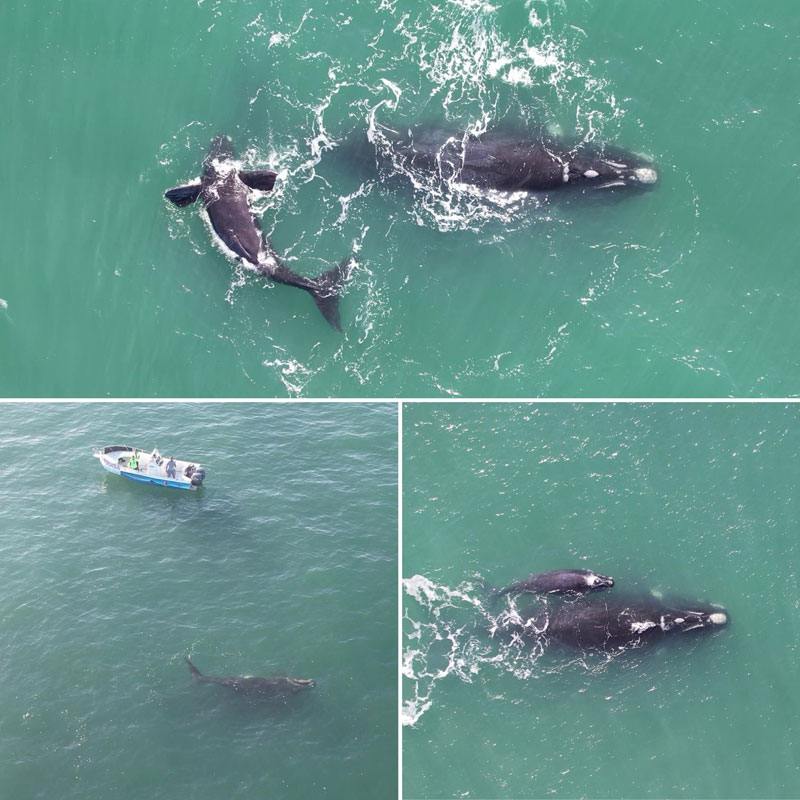

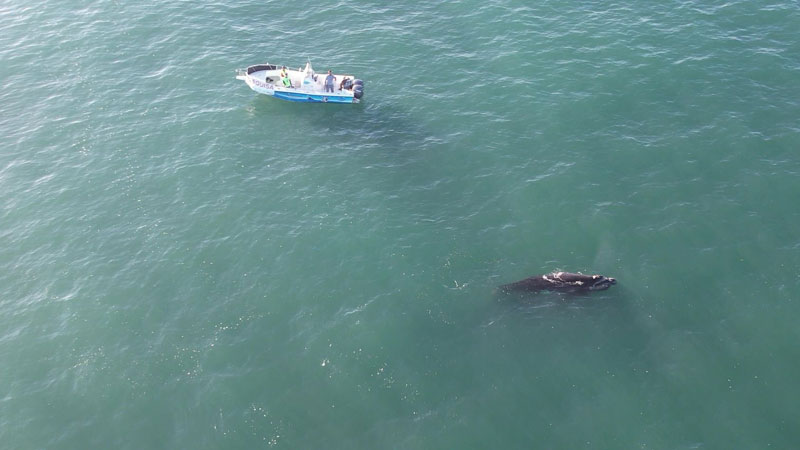
A new scientific study shows that southern right whales (Eubalaena australis) react sensitively to boats even when existing regulations are followed, particularly mother-calf pairs in their key refuge areas off the Brazilian coast.
Using drones and theodolites, researchers were able to record the animals’ behavioral changes with exceptional precision for the first time. The results are clear: in the presence of boats, the animals swim faster, alter their movement patterns, and reduce behaviors that are important for the calves’ development.
Particularly critical is the fact that the currently applicable minimum distance of 120 meters is insufficient to avoid these effects. Only at a distance of about 160 meters do the behaviors return to a state closer to natural.
The study was conducted as part of a master’s thesis at the Universidade Estadual de Maringá in Brazil and provides an important scientific foundation for the further development of management measures in right whale whale watching.
This research was made possible by YAQU PACHA with support from Zoomarine Portugal, Nuremberg Zoo, and Duisburg Zoo.
YAQU PACHA follows a clear approach: science as the foundation for effective conservation.
Only through reliable data can sustainable decisions be made—for animals, habitats, and people.
The message is clear: whale watching can be part of the solution—but only if we respect the animals’ boundaries.