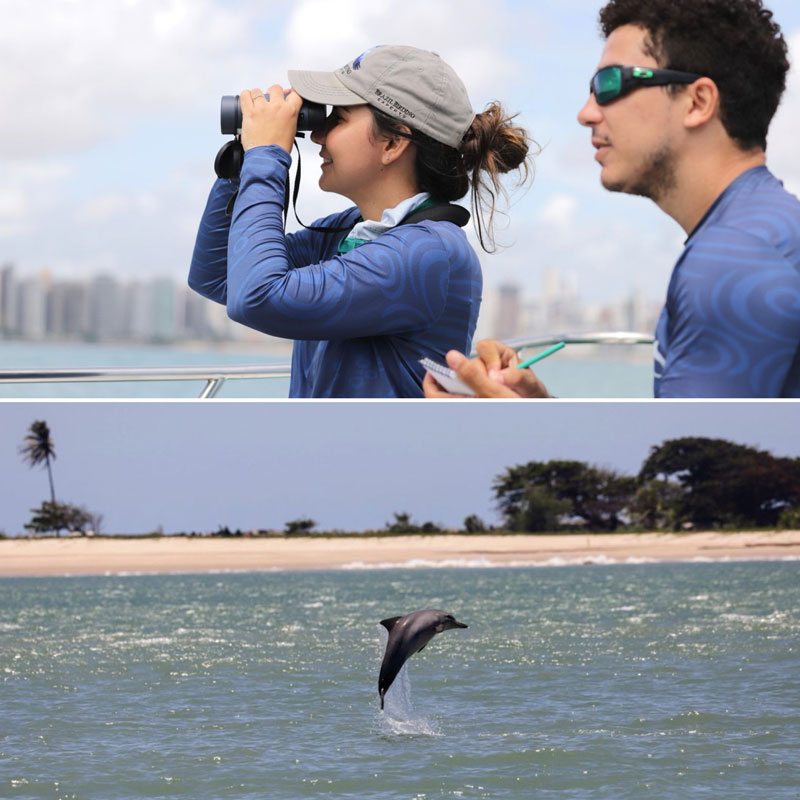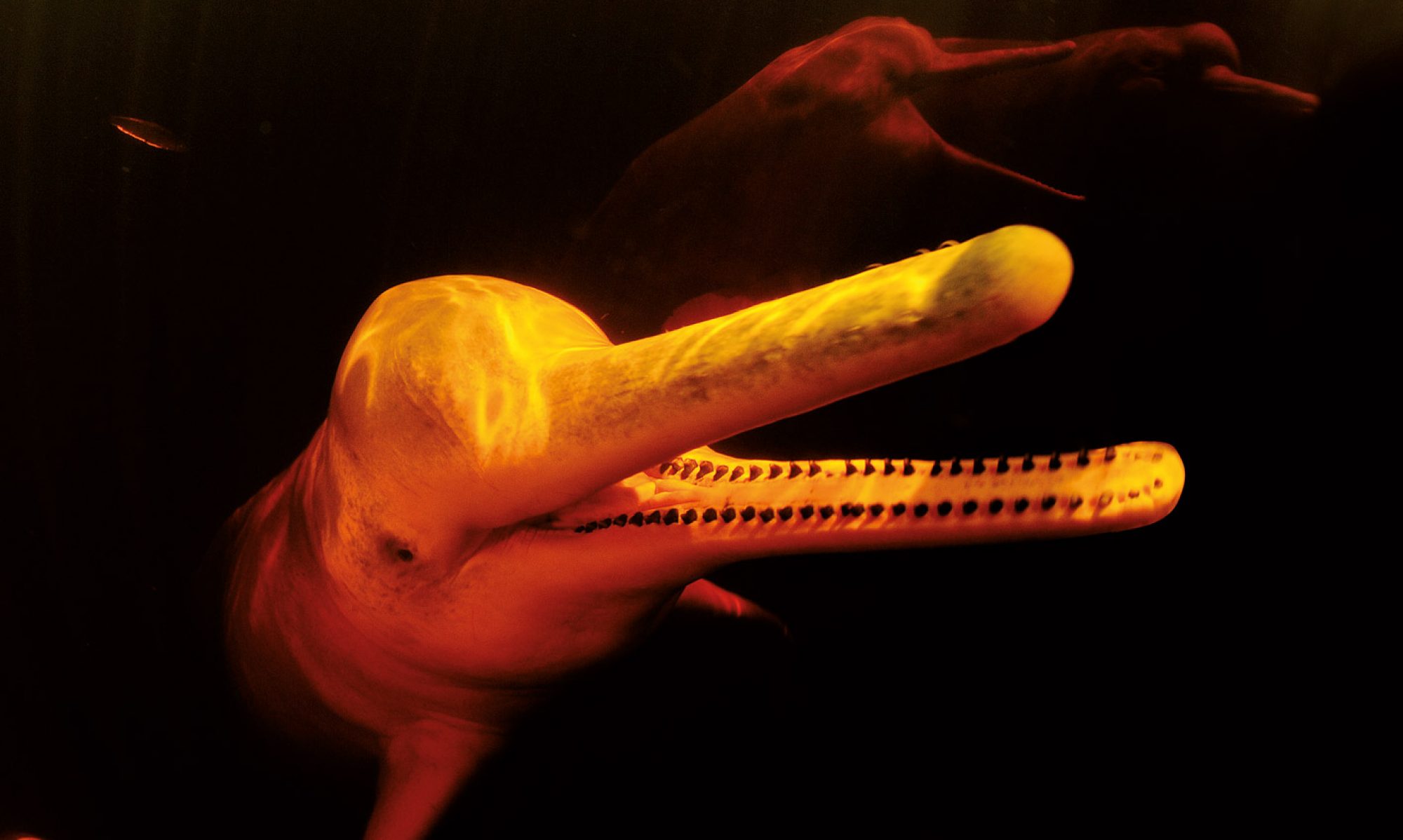

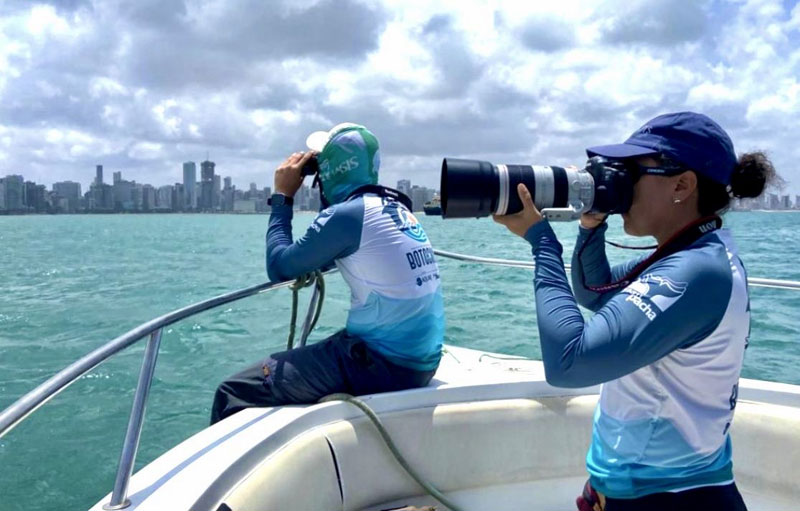
In 2025, long-term monitoring of Guiana dolphins (Sotalia guianensis) in Mucuripe Bay near Fortaleza (Brazil) continued. The project is carried out by the Brazilian organization Aquasis and aims to monitor the population of this coastal species over the long term, document its health status, and better understand the impacts of human activities on its habitat.
The research is conducted as part of regular boat expeditions, during which the animals can be individually identified via photo-identification based on their dorsal fins. This allows for the analysis of population size, survival rates, reproduction, and migration patterns over many years. Such long-term data provide an indispensable foundation for effective conservation measures.
During fieldwork, numerous potential threats were identified, including heavy boat traffic, set-net fishing, plastic waste, and various recreational activities in coastal areas. These factors can adversely affect the dolphins’ behavior, health, and long-term survival and highlight the urgent need for continuous monitoring and improved coastal zone management.
The conservation of Guiana dolphins, Sotalia guianensis serves as a representative example of many coastal species whose habitats are under pressure worldwide due to human activities. Long-term scientific projects are therefore a central component of modern conservation strategies in line with the One Plan Approach.
This project is made possible by the ongoing support of Zoomarine Portugal, Nuremberg Zoo, Rancho Texas, and Duisburg Zoo, whose long-term commitment plays a decisive role in implementing research and conservation measures for endangered coastal dolphins.
We thank all our partners for their continued trust and support in protecting marine biodiversity.