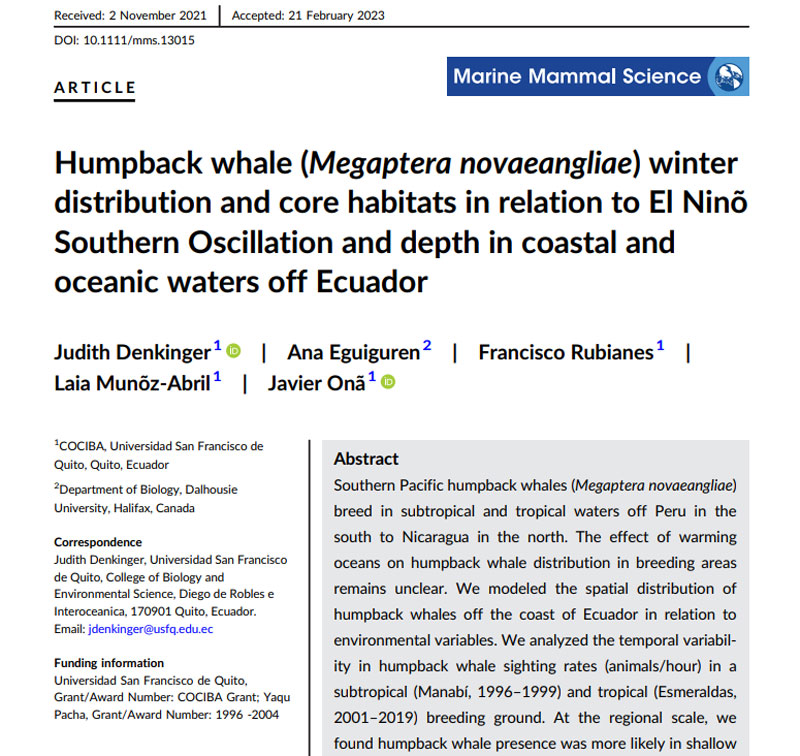

Long-term study on humpback whales published

Humpback whales migrate to tropical waters with temperatures ranging from 22 to 28 degrees Celsius to mate and give birth, where ocean warming could now lead to a shift in their range. Using data from regional surveys and 20 years of observations in a tropical and subtropical breeding area off the coast of Ecuador, we show that while the whales prefer the tropical breeding area off Esmeraldas, whale sightings in the cooler subtropical breeding area increase under warmer (ENSO—El Niño) conditions. Our results suggest that under ENSO conditions, humpback whales may reach the limit of their temperature tolerance in the warm tropical waters around Esmeraldas, whereas under La Niña conditions, cooler areas such as Peru and Manabí are less suitable, prompting the whales to migrate further north.
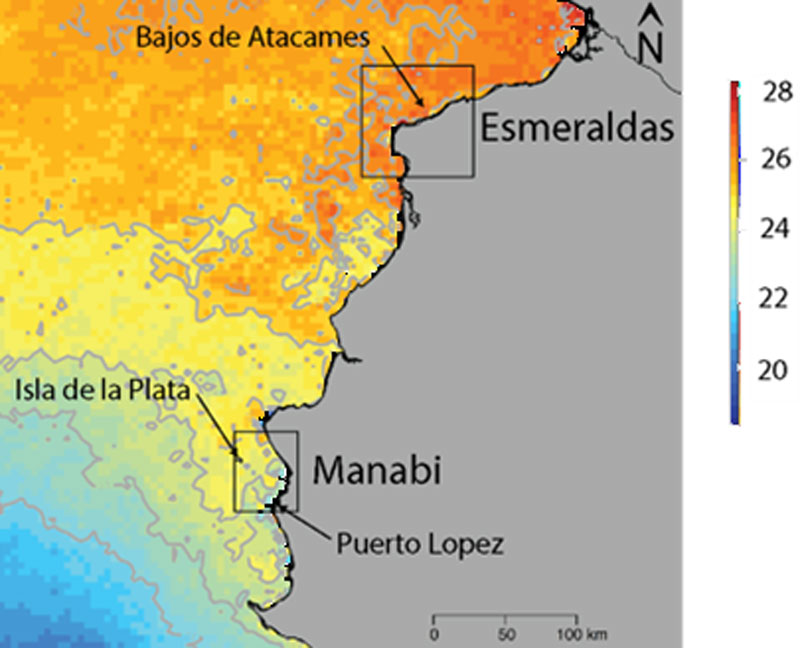
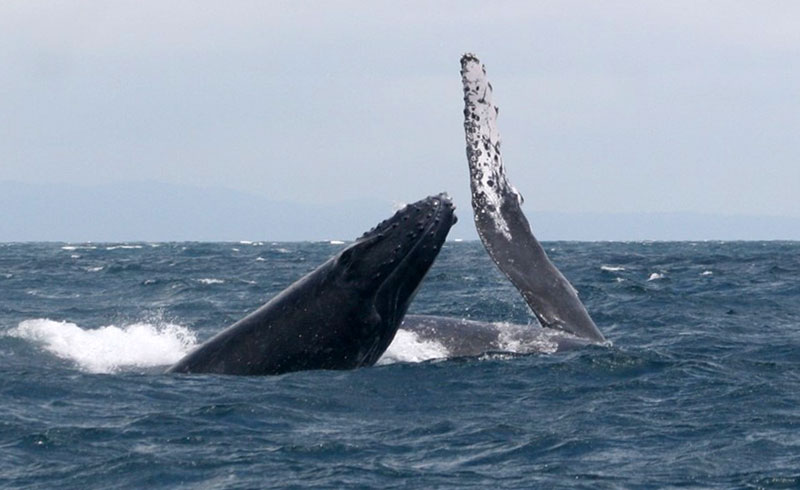
Humpback Whales Breeding Ground: Ecuador, Esmeraldas, Manabí

Humpback whales

Article: Humpback Whales in Ecuador by Judith Denkinger

YAQU PACHA has supported this work for many years, and now this article by Judith Denkinger has been published.
Video about her work with humpback whales on YouTube

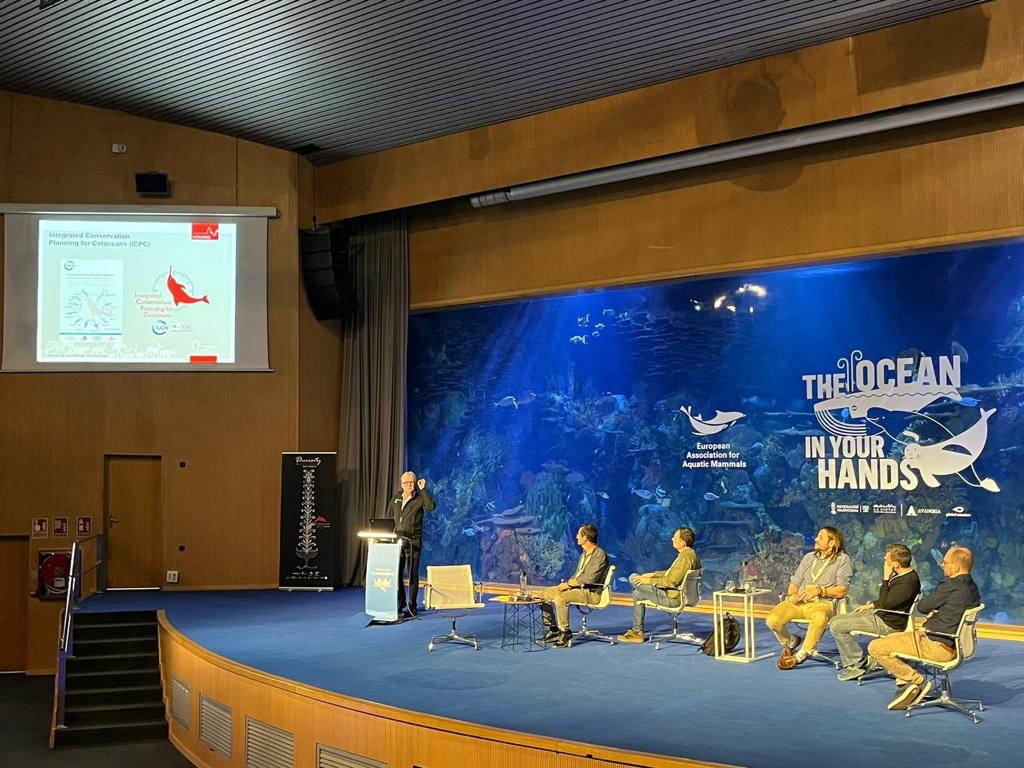
YAQU PACHA at the EAAM Conference

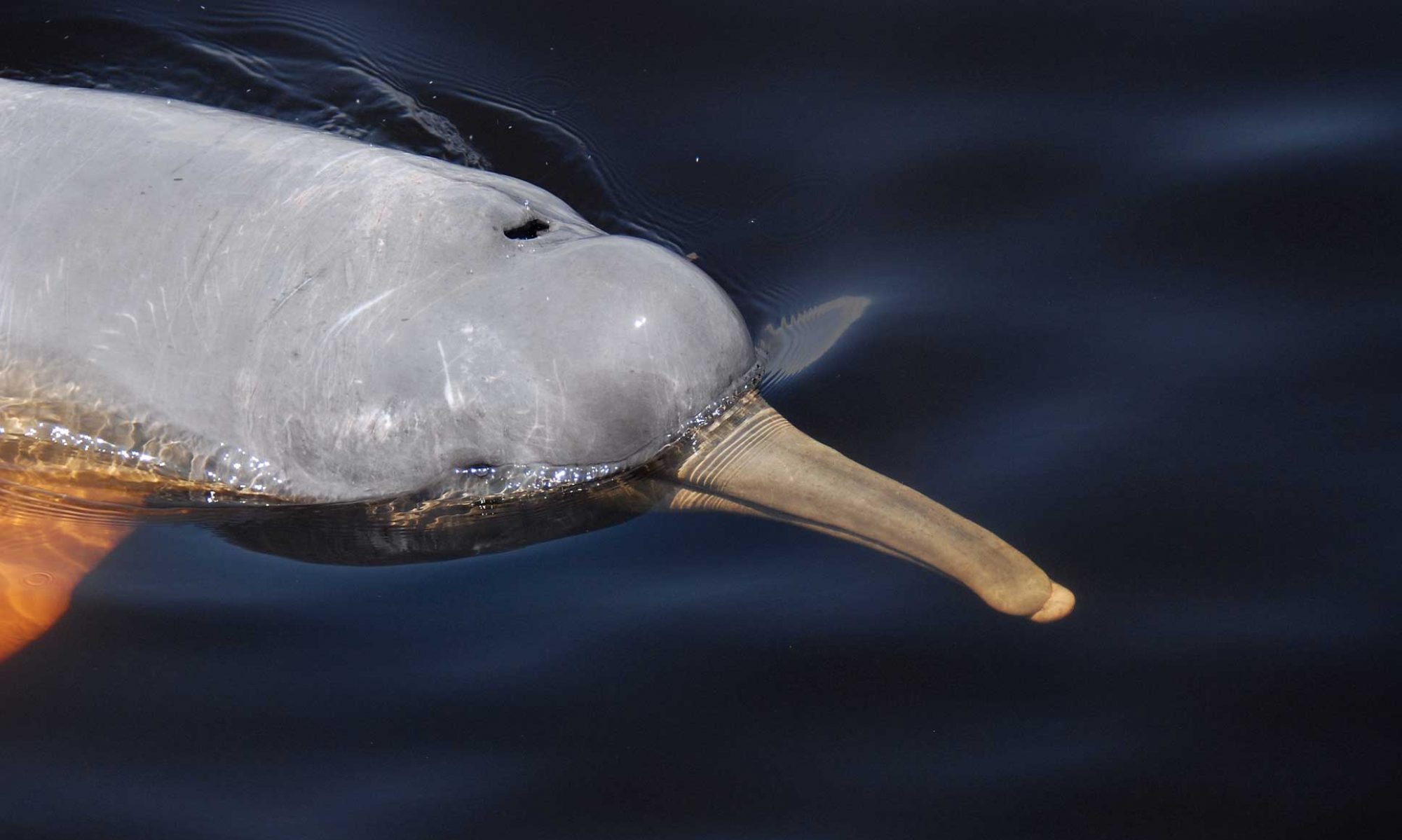
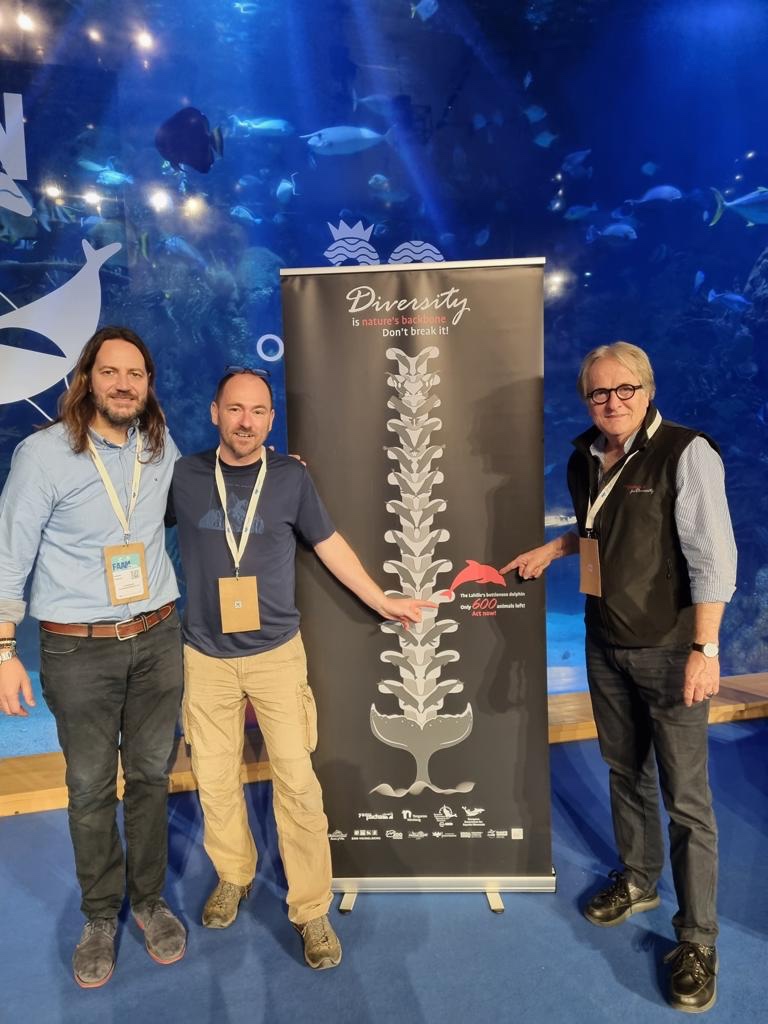
YAQU PACHA is participating in the EAAM conference in Valencia, Spain, and played a key role in organizing the Conservation Round Table. Dr. Lorenzo von Fersen will present our species conservation projects there and will also introduce our new campaign to protect the last 600 remaining Lahille’s bottlenose dolphins.

Dr. Lorenzo von Fersen at the EAAM Conference in Valencia
EAAM Presentation: Lahille's Bottlenose Dolphin Campaign

From left to right: Dr. Daniel Garcia Parraga (Scientific Director of L’Oceanografic, Valencia), Martin Böye (Elected President of EAAM), and Dr. Lorenzo von Fersen (Chairman of YAQU PACHA) at the launch of YAQU PACHA’s new campaign to save the last 600 remaining Lahille’s bottlenose dolphins.