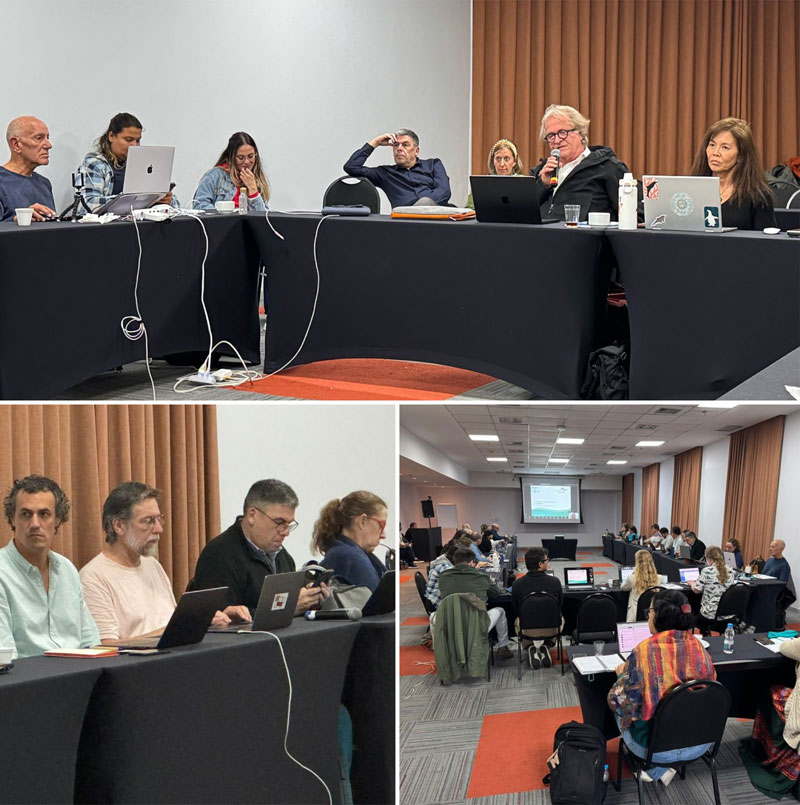

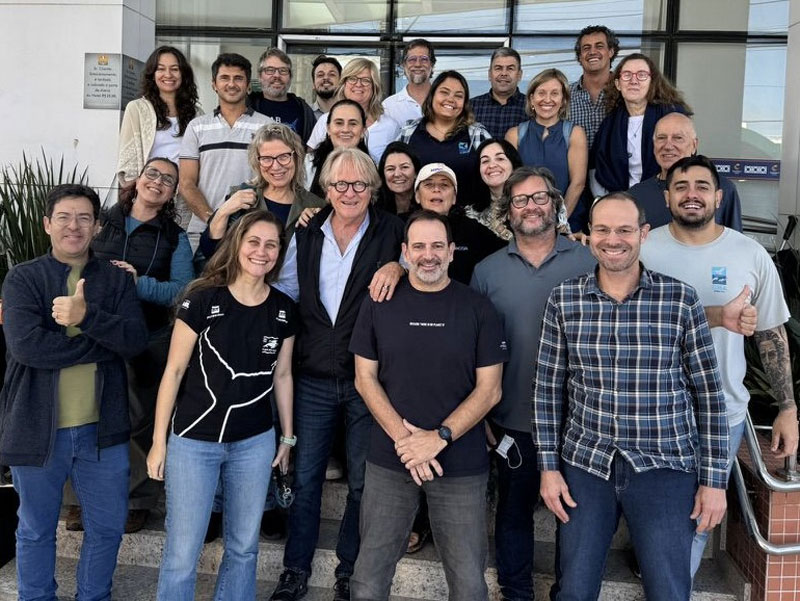
From June 30 to July 5, 2025, more than 50 experts on whales and dolphins (cetaceans) met in Santos, Brazil. The goal of the workshop, organized by the Scientific Committee of the International Whaling Commission (IWC) and the Brazilian government, was to review and updateConservation Management Plans (CMPs) for some of South America’s most endangered species.
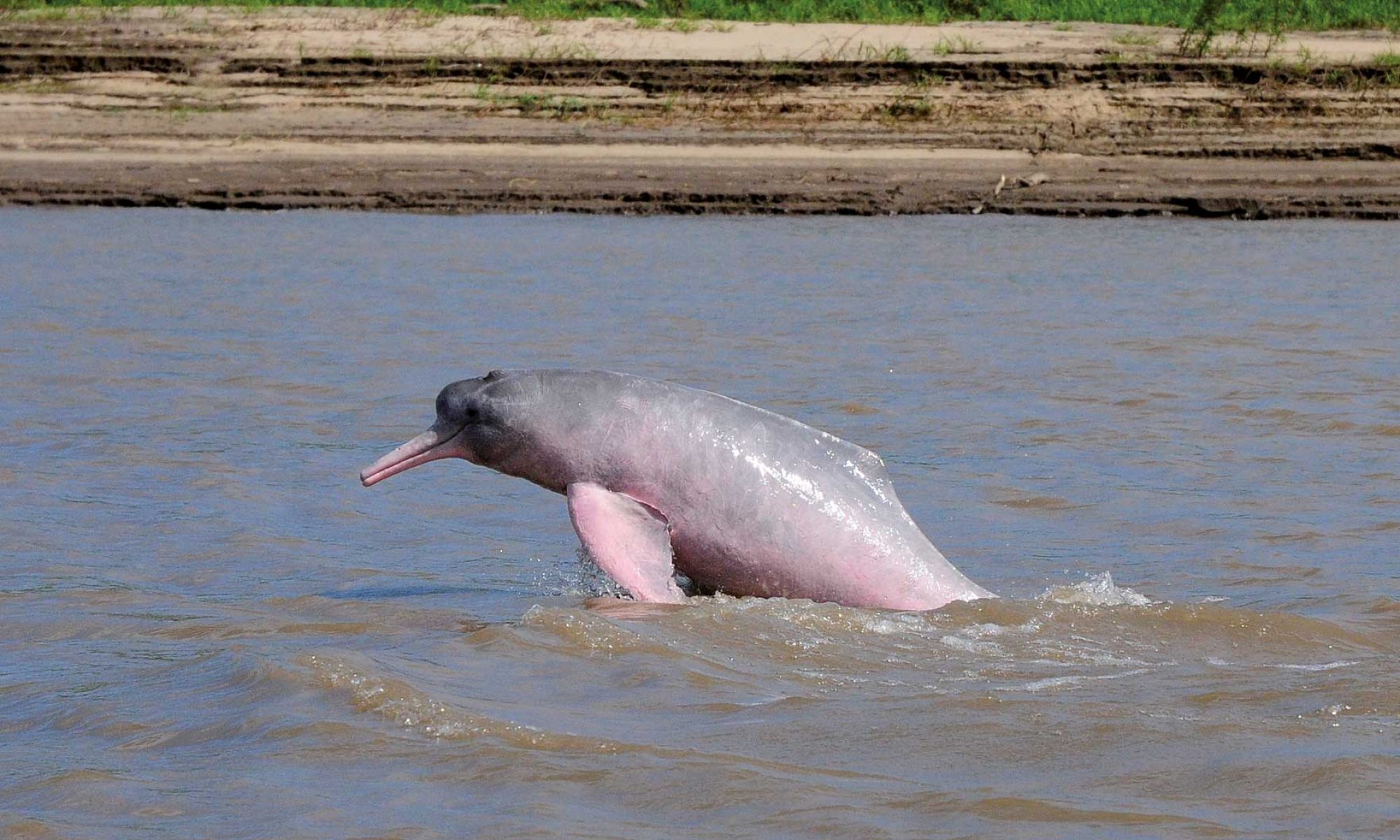
Among other topics, the focus was on the southern right whale (Eubalaena australis), South American river dolphins (Inia geoffrensis, Sotalia fluviatilis), and the Guiana river dolphin (Sotalia guianensis), the Lahille's bottlenose dolphin (Tursiops truncatus gephyreus), and the Franciscana dolphin (Pontoporia blainvillei).
Dr. Lorenzo von Fersen, chairman of YAQU PACHA, attended the workshop and emphasized his organization's commitment:
“This meeting was of the utmost importance, as we not only evaluated progress but also spoke openly about the threats these cetaceans currently face. Issues such as bycatch, climate-related events, and the increasing incidence of infectious diseases are particularly pressing. It is encouraging to see that we are working together on science-based solutions.”
YAQU PACHA not only provided content support for the workshop but was also one of its financial sponsors—a clear sign of the organization’s strong commitment to the protection of endangered cetaceans in South America.
A particular highlight was the presentation by the Alliance for the Franciscana Conservation Research, Rescue, and Rehabilitation (AFCR3). Dr. Cristiane Kolesnikovas of R3 Animal gave a moving account of the caseof “Francisca,”a Franciscana dolphin currently undergoing rehabilitation—a symbol of the species’ vulnerability and resilience.
Dr. Alex Zerbini, former chair of the IWC Scientific Committee, praised the results:
“Workshops like this one are essential. They bring together expertise, foster collaboration, and ensure that conservation plans remain living documents—continuously adapted to the latest scientific findings and proven conservation practices.”
YAQU PACHA receives significant support for its projects from zoological institutions such as the Nuremberg Zoo, the Duisburg Zoo, the Heidelberg Zoo, the Düsseldorf Aquazoo, Zoomarine Algarve, and Rancho Texas. These partnerships make the “One Plan Approach” a reality—an integrated approach to species conservation in which measures in the natural habitat (in situ) and in human care (ex situ) are meaningfully interlinked.
For more information:
https://iwc.int/management-and-conservation/conservation-management-plans