
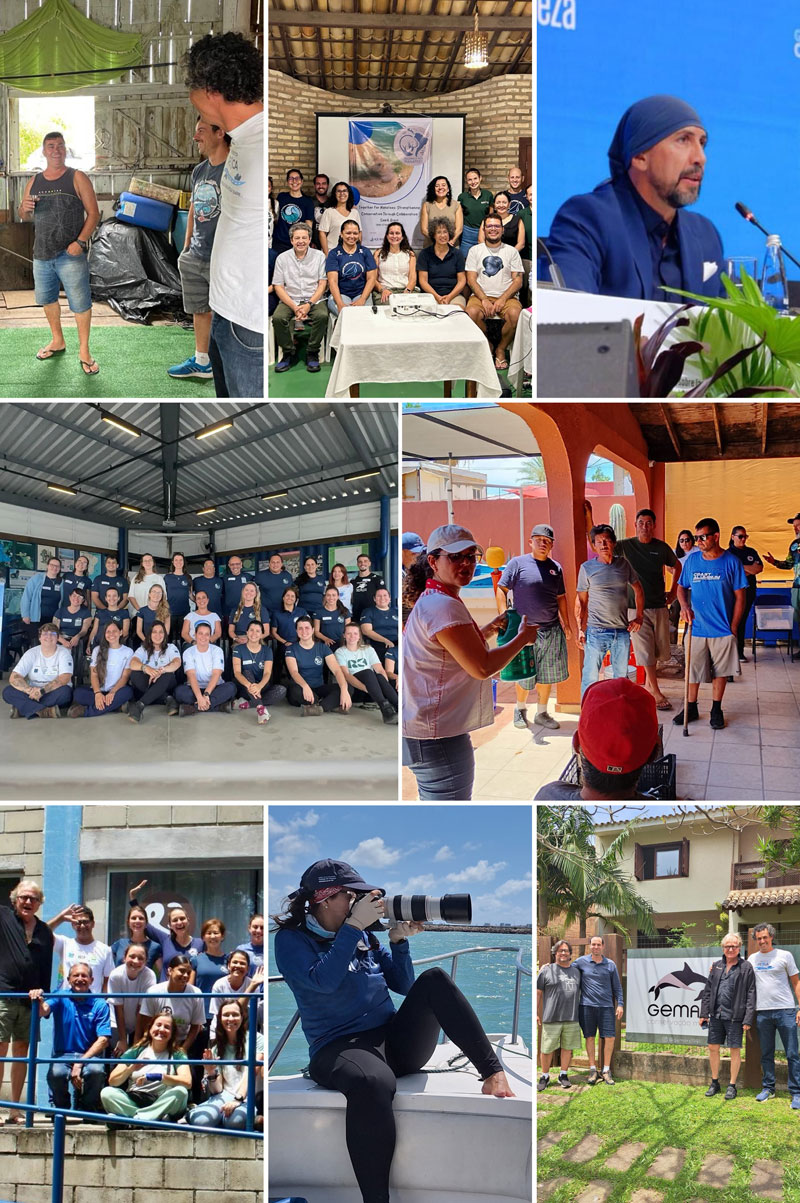
Now more than ever, the protection of endangered marine and aquatic mammals requires international scientific cooperation. Many species inhabit regions that span multiple countries, while threats such as bycatch, habitat loss, pollution, and climate change are steadily increasing. In order to develop effective conservation measures, scientific findings, field research experience, and practical conservation approaches must be shared internationally.
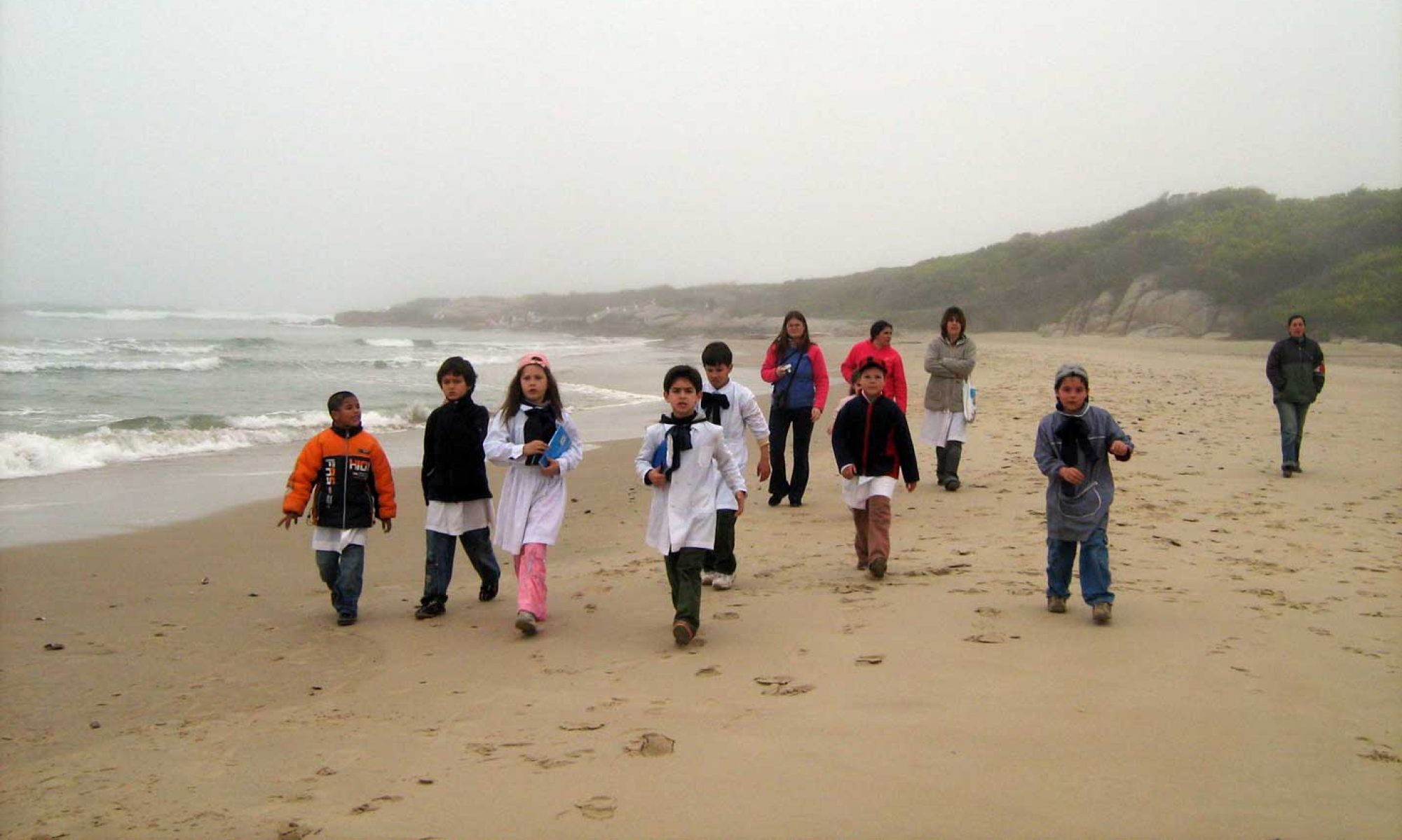
For YAQU PACHA, collaboration between scientists, local partners, and local communities plays a central role. Sustainable conservation can only succeed if research findings are translated into concrete actions while simultaneously taking into account the so-called “human dimension”—that is, the active involvement of fishing communities, students, local organizations, and regional networks. This involves not only the exchange of knowledge but also long-term capacity building, the promotion of local expertise, and the joint development of practical solutions for people and nature.
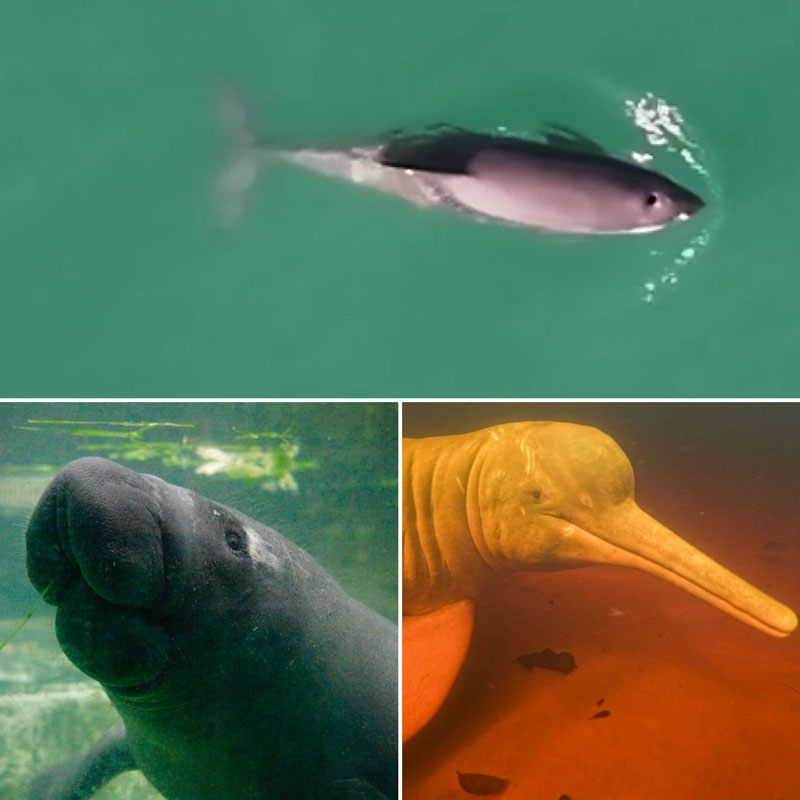
International conferences, research collaborations, and joint conservation projects not only facilitate the exchange of the latest scientific findings but also foster long-term partnerships for the protection of endangered species such as vaquitas, river dolphins, and manatees. In particular, supporting young local scientists and on-site experts is of great importance for building long-term regional expertise in marine mammal and species conservation and for strengthening sustainable conservation strategies in the respective countries.
That is why YAQU PACHA supports scientific networks, research projects, and the international exchange of knowledge and experience. After all, successful species conservation is not based solely on research—but on scientific collaboration, trust, and shared solutions for people and nature.