

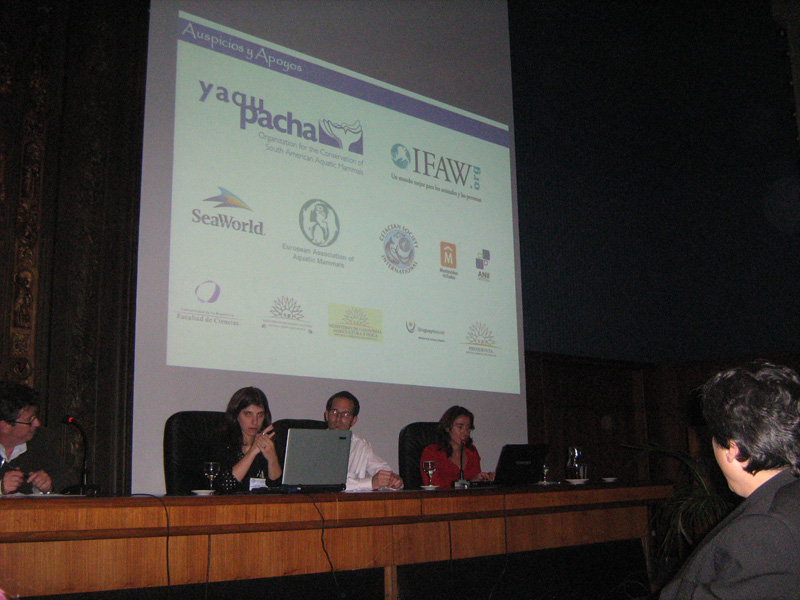
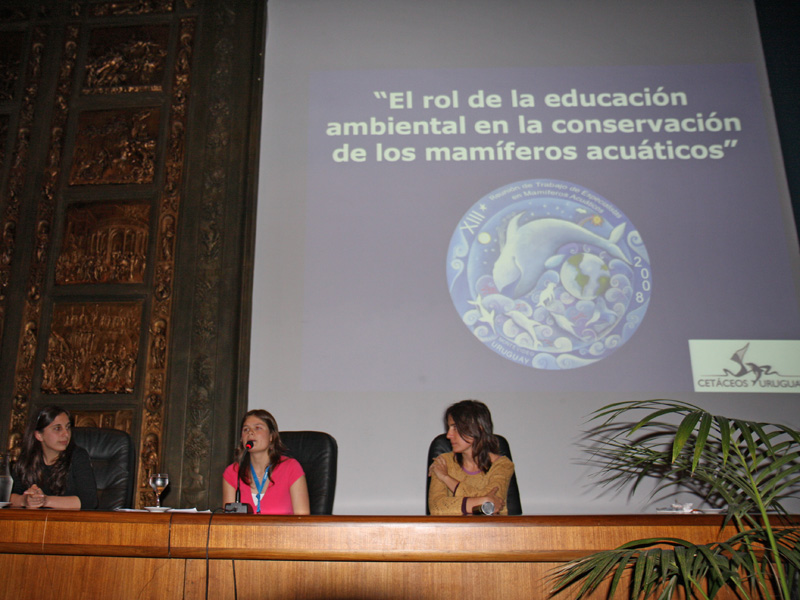
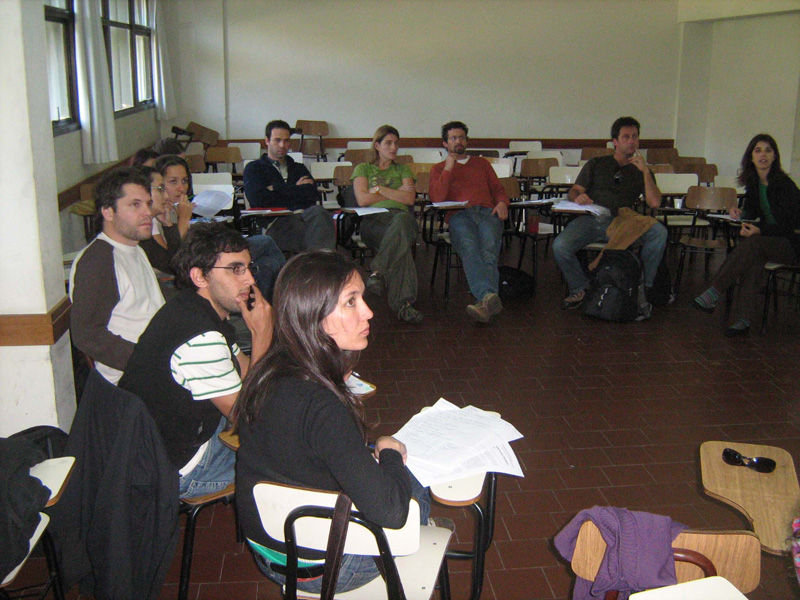
Conferences and workshops | The exchange of scientific knowledge between Latin American and internationally recognized scientists in the field of species conservation is a top priority at YAQU PACHA.
To date, YAQU PACHA has provided financial support for five workshops and two conferences:
- Human Dimension in Small Cetacean Conservation, 2022 Heilsbronn
- 19th Working Meeting of Specialists on Aquatic Mammals in South America (19th RT) 19 RT Brazil, 2022
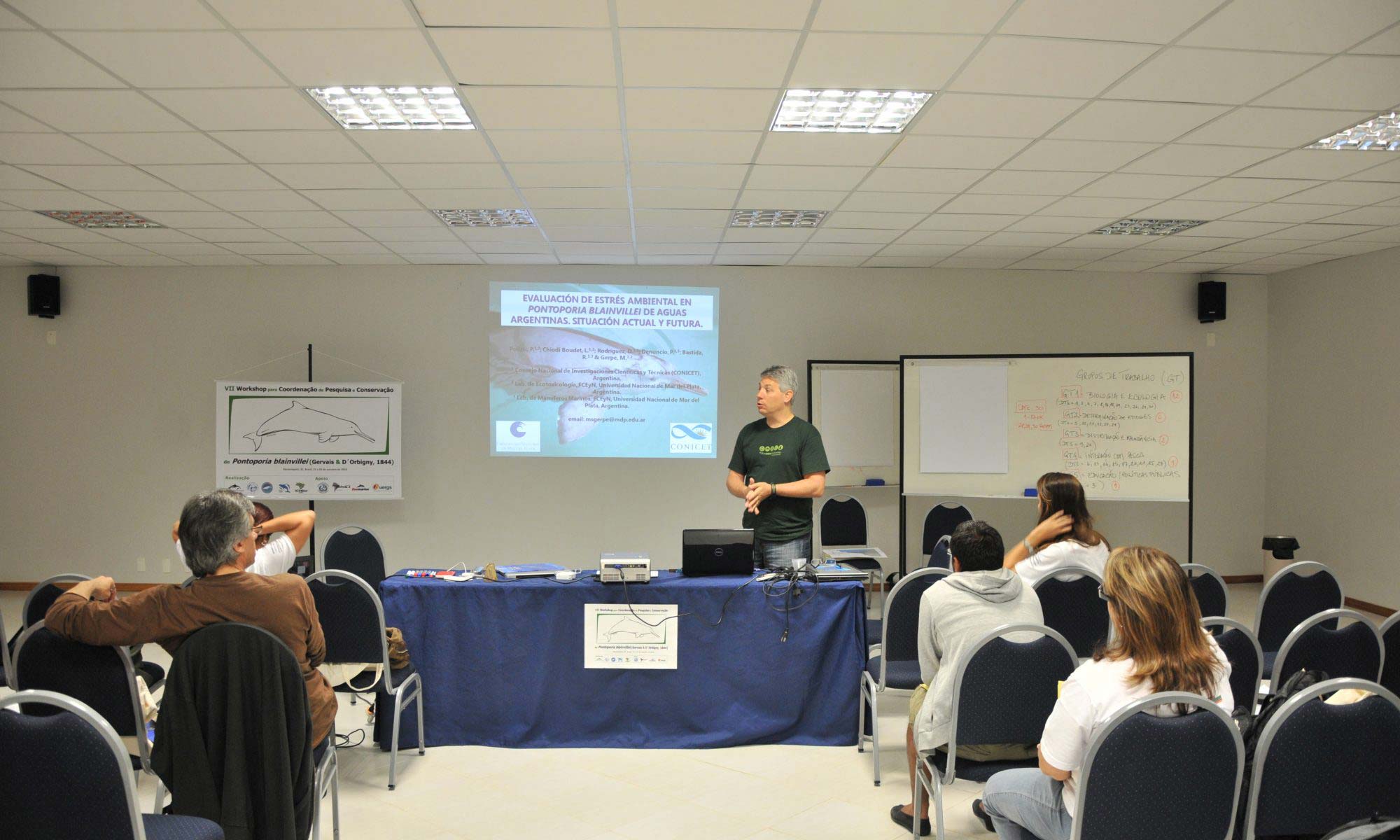
- VII Workshop: Status of the La Plata Dolphin (Florianopolis, Brazil, 2010)
- Final Workshop of the Arenas Project (Uruguay, 2010)
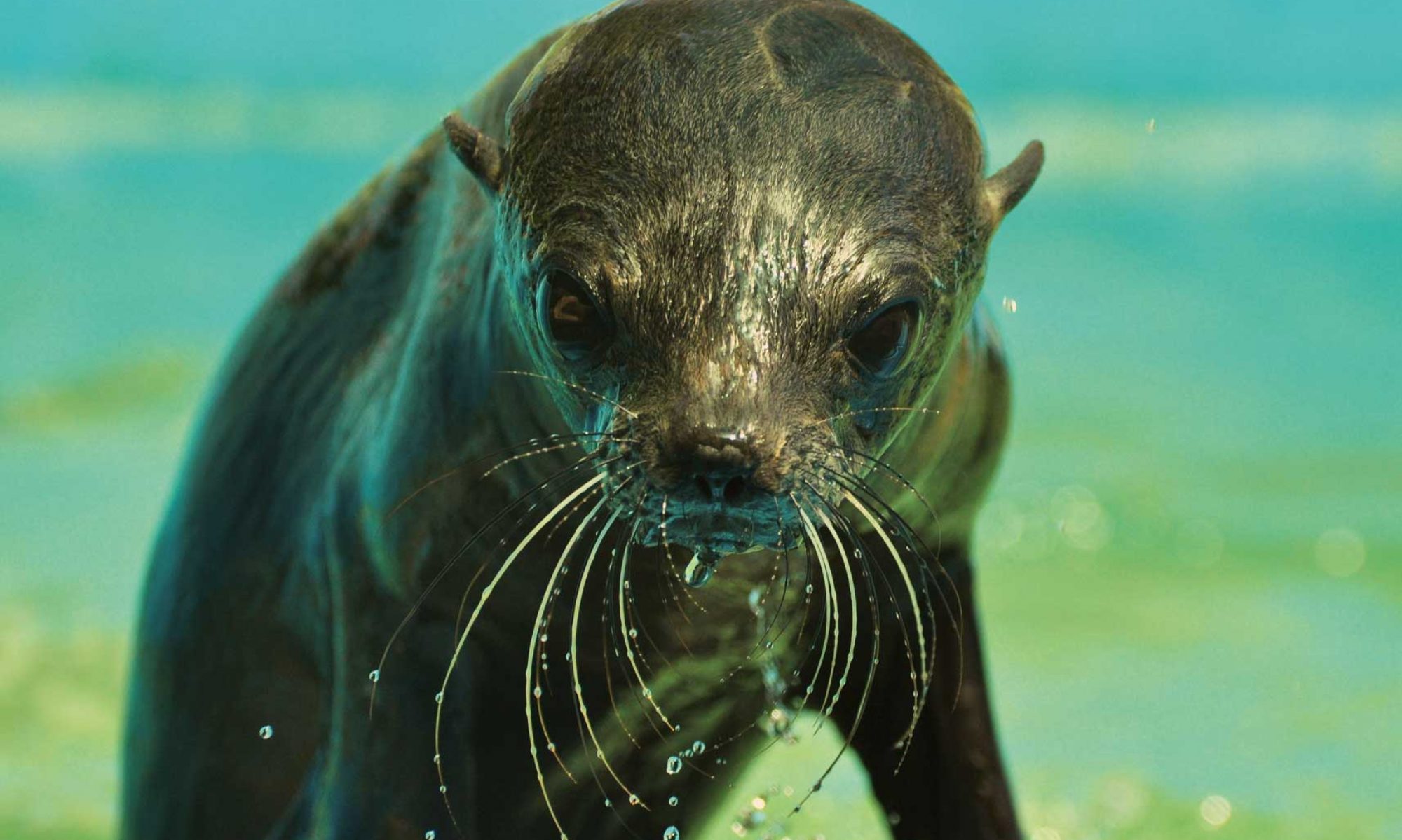
- Workshop: Status of South American sea lion populations (2009)
- Meeting of South American Marine Mammal Specialists, SOLAMAC (2008)
- Workshop: Static Methods in Population Estimation (2003)
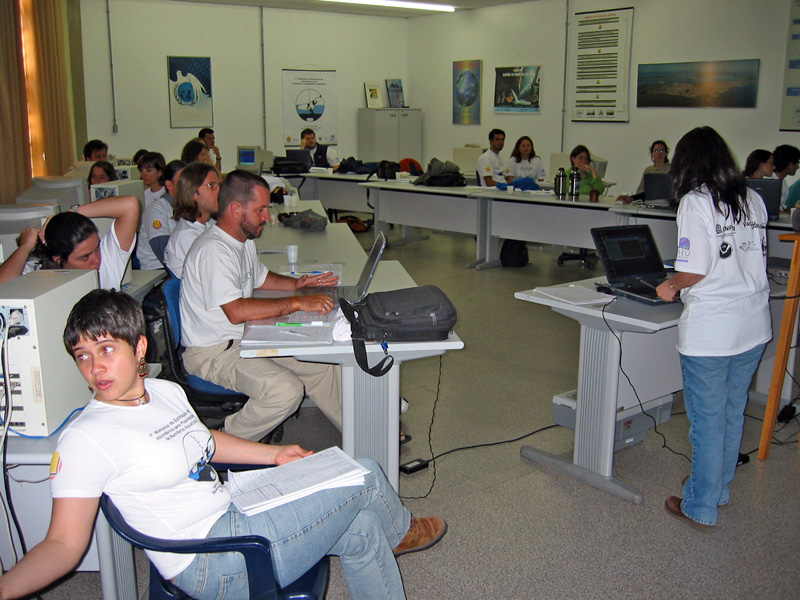
YAQU PACHA also supports scientists from South America and Latin America so that they can participate in international species conservation conferences and workshops. The exchange of scientific knowledge is a top priority in species conservation. All YAQU PACHA projects are supervised by our scientific advisory board.
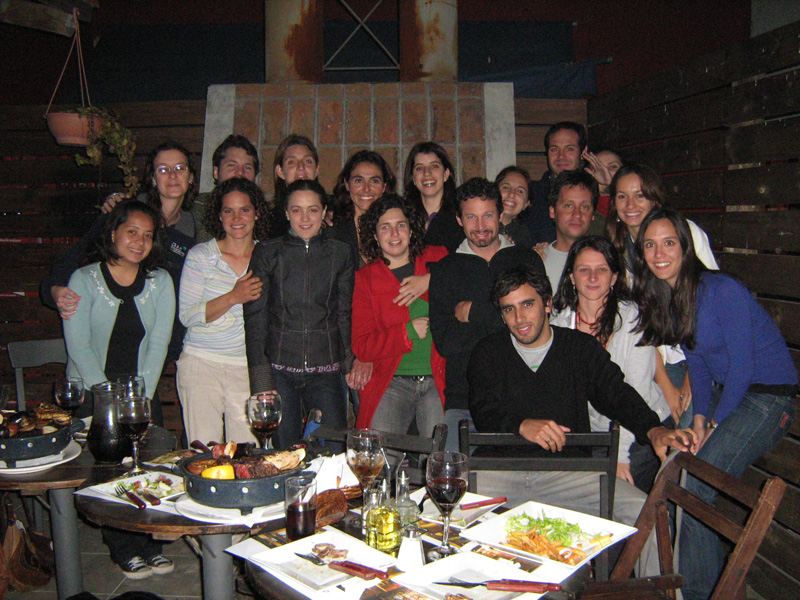
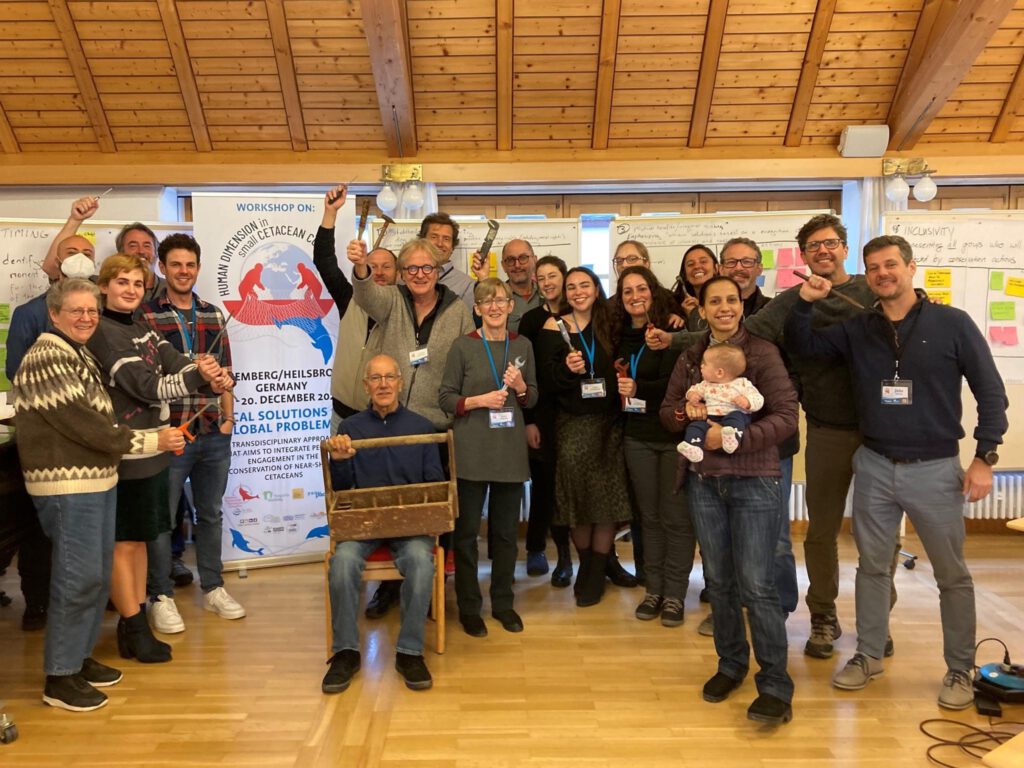
In 2022, with the support of our partners, the YAQU PACHA Germany team successfully organized and conducted our important workshop Human Dimension in Small Cetacean Conservation.
For five days, more than 30 experts from 15 countries discussed how the human dimension can be applied to the conservation of small whales and dolphins. Our main goal was to expand the concept of integrated species conservation by involving people, especially those who share their environment with endangered species. To achieve this goal, we invited not only field biologists but also experts such as psychologists, sociologists, anthropologists, tourism experts, and economics and communications specialists. Together, we shared our experiences in species conservation, held lively discussions, and developed ideas for the future.
The next step is to prepare a report that can assist decision-makers in situations where the coexistence of animals and humans might be threatened, primarily by human activities.
We will continue to present the final results of the conference here.
30 years of YAQU PACHA e.V. | Videos | Membership