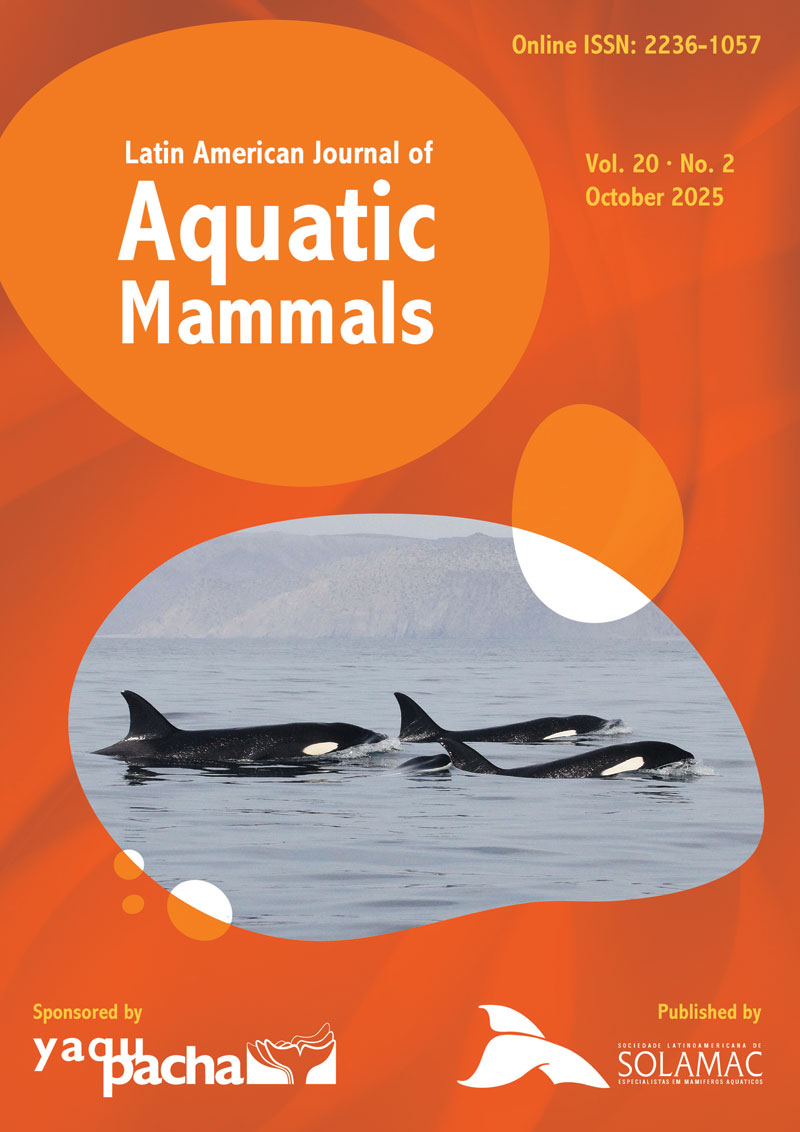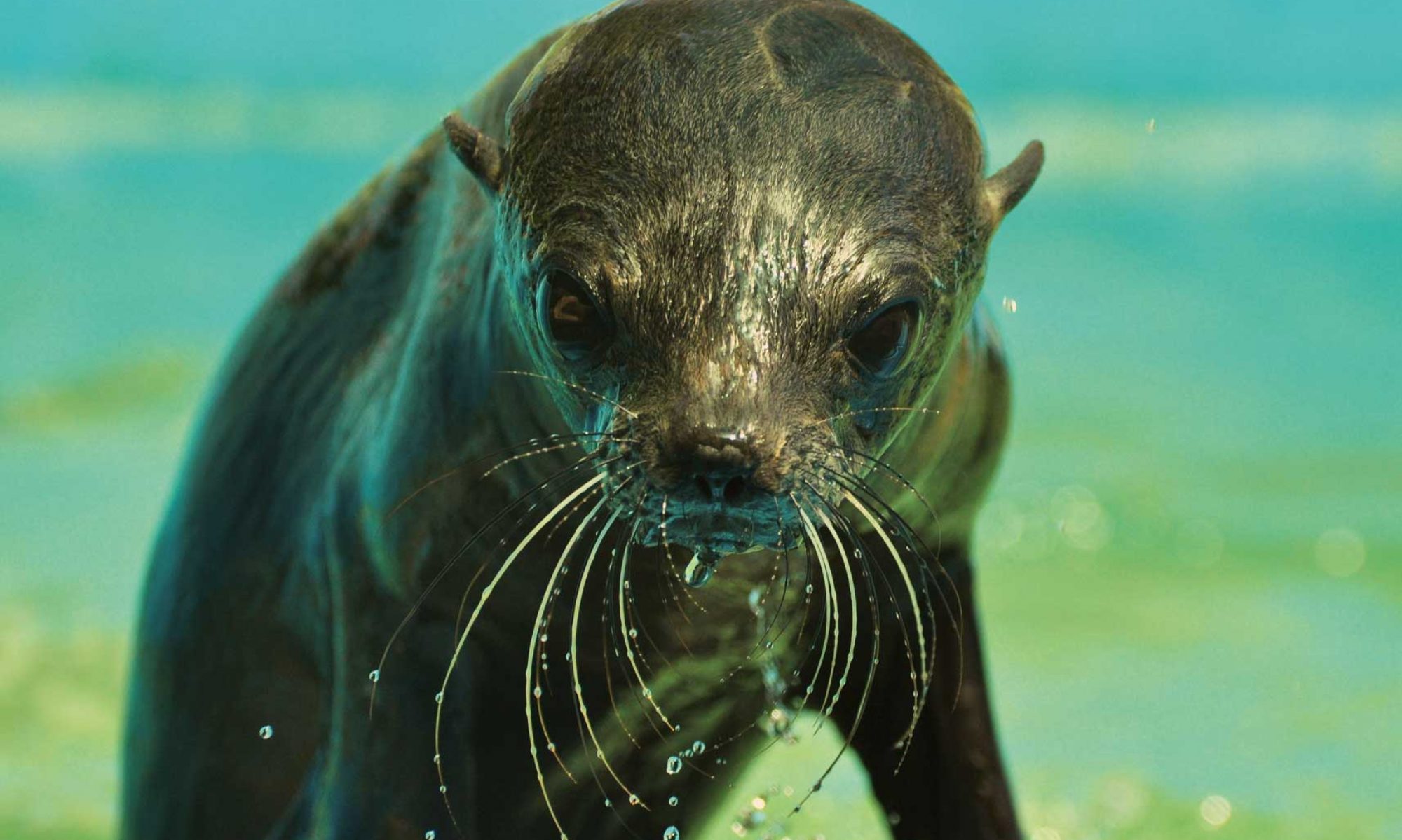

A new study published in the Latin American Journal of Aquatic Mammals (LAJAM) reveals alarming levels of mercury in dolphins and fish in Lake Maracaibo.
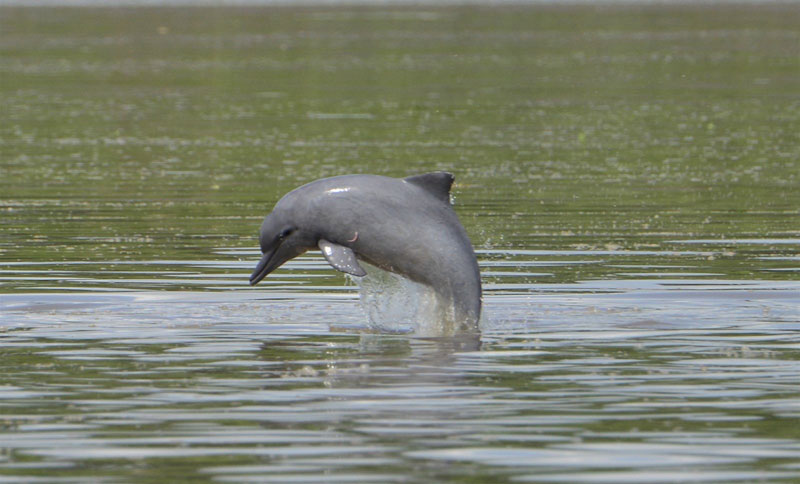
A recent study by Yurasi Briceño et al., supported by YAQU PACHA, reveals alarming levels of mercury contamination in Guayana dolphins (Sotalia guianensis) and fish from the southern part of Lake Maracaibo in Venezuela.
Alarming results:
• Mercury was detected in all fish and dolphin samples tested.
• The WHO limit is 0.5 mg/kg.
• Four out of six dolphins significantly exceeded this limit, one of them with a level of 2.96 mg/kg.
• The fish species Gobioides broussonnetii also exceeded the limit, with a level of 0.92 mg/kg.
Why this is important:
Mercury does not remain in the water but enters the food chain, moving from sediments to fish, dolphins, and ultimately to humans.
These findings indicate a threat to marine wildlife and a serious risk to local communities that depend on fishing for their livelihoods.
YAQU PACHA supports this research to raise awareness of the connections between environmental pollution, species conservation, and human health.
The full study was published in the Latin American Journal of Aquatic Mammals (Vol. 20, No. 2, 2025) .
YAQU PACHA has supported the publication of the LAJAM Journal from the very beginning.