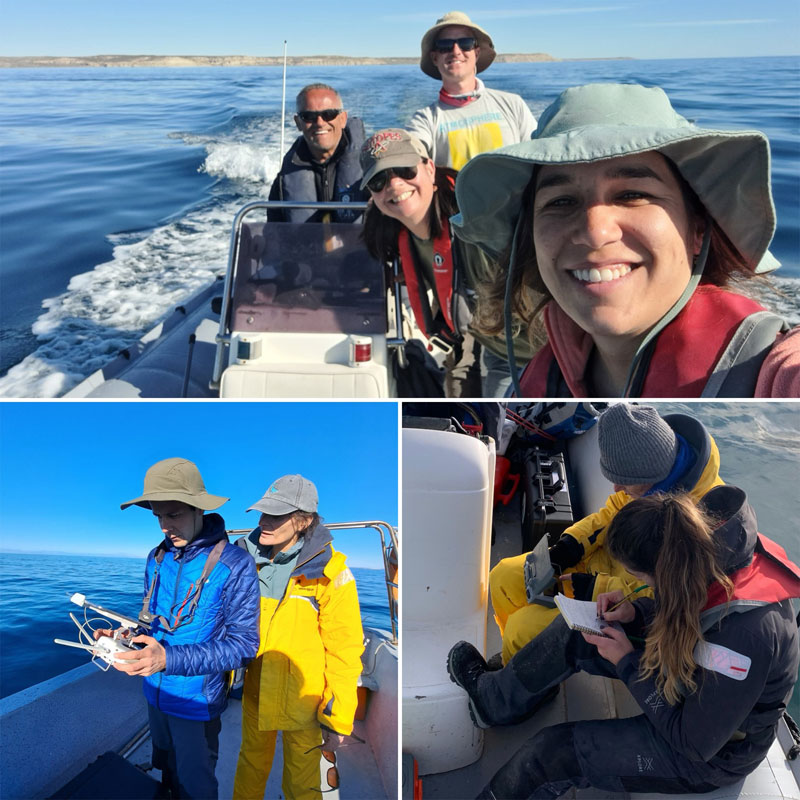

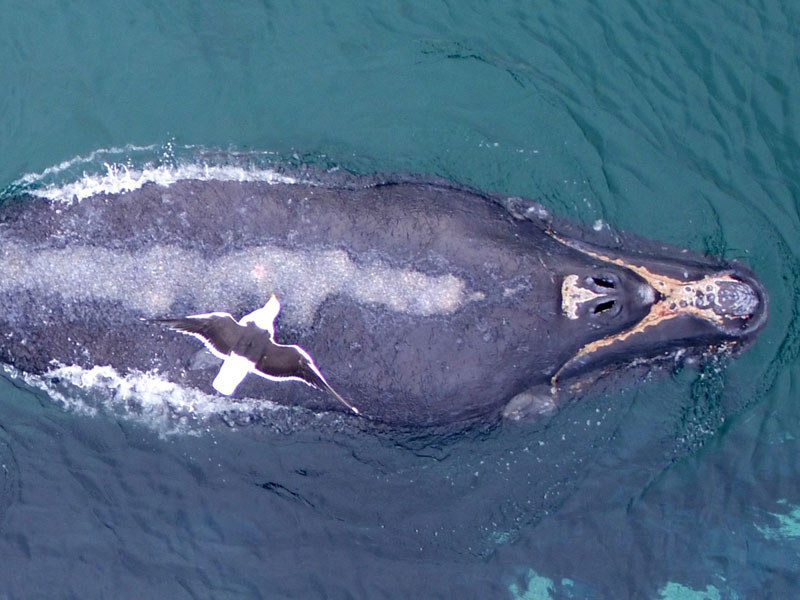
With the support of the Nuremberg Zoo, we are conducting a multidisciplinary study in collaboration with our partners to investigate the endocrine responses of southern right whales (Eubalaena australis) to various factors, such as changes in food quality and availability, attacks and harassment by seagulls, injuries from fishing nets and collisions, and ship traffic. To this end, we measure hormones that indicate the stress response (glucocorticoids) in adipose tissue biopsies and use aerial images from drones to assess the animals’ physical condition and the presence of injuries, as well as to identify the animals. By integrating these methods, we aim to understand how various human and environmental influences affect the health and well-being of the whales.
The project is led by researchers from the Instituto de Conservación de Ballenas, the Marine Mammal Laboratory atthe Centro para el Estudio de Sistemas Marinos (CESIMAR-CONICET), and the Instituto de Investigaciones en Ciencias de la Salud (INICSA-CONICET).
So far during the 2024 season, we have sampled more than 120 individual southern right whales—including mothers with calves, adults, and juveniles—and taken more than 6,000 aerial photographs. And this is just the beginning!
The goal of the project is to better understand the physiology of whales in order to gather important information for the conservation of these incredible marine mammals and the marine environment. We remain committed to whale conservation, both regionally and globally!