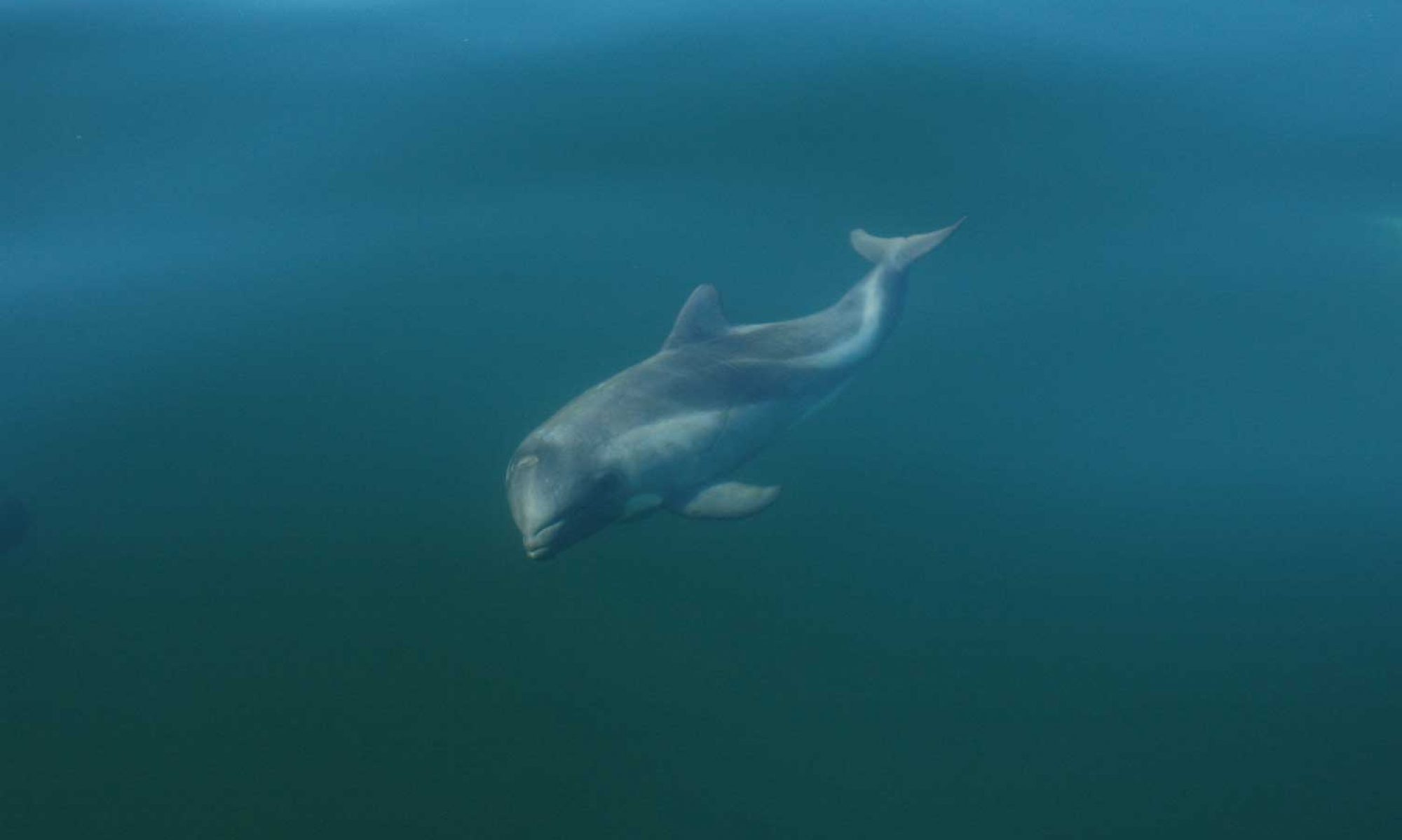

Animal welfare for species conservation | YAQU PACHA has been active as a species conservation organization in South America and Latin America since 1992, working to protect endangered aquatic mammal species from extinction.
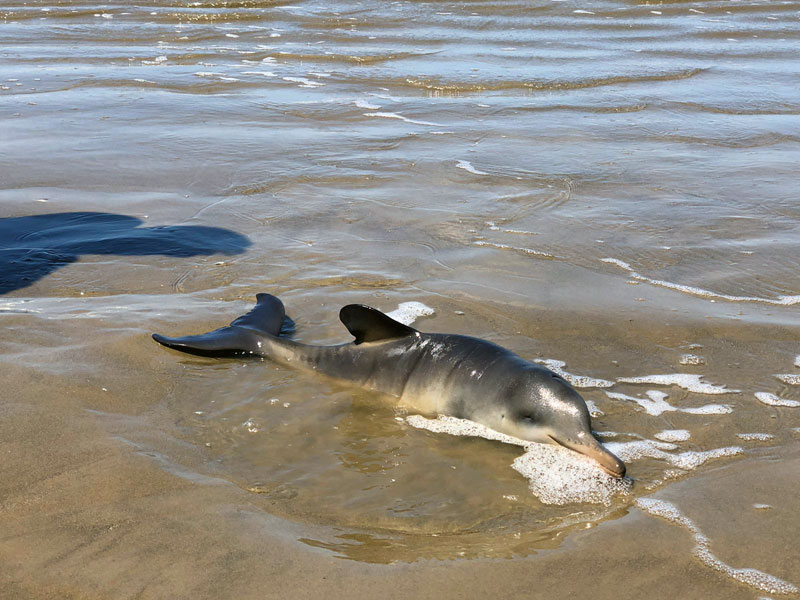
But YAQU PACHA is also active in animal welfare, such as rescuing stranded La Plata dolphins. These are mostly young animals and dolphin calves that we find on beaches during beach patrols carried out by our partners, such as CRAM-FURG in Brazil, Karumbé in Uruguay, and Fundación Mundo Marino in Argentina.
In this context, YAQU PACHA is working with the National Marine Mammal Foundation (USA) and local organizations to develop a coordinated, step-by-step action plan to protect the La Plata dolphin – Franciscana – Toninha. The first step of the strategy aims to standardize existing rescue and rehabilitation measures for animal welfare in South America and improve the survival rate of newborns. To this end, local veterinarians are being equipped with the knowledge and tools to improve the animals' chances of survival.
This animal welfare project will serve as a guide for future conservation measures for other small dolphins and porpoises facing similar threats.
Procedure
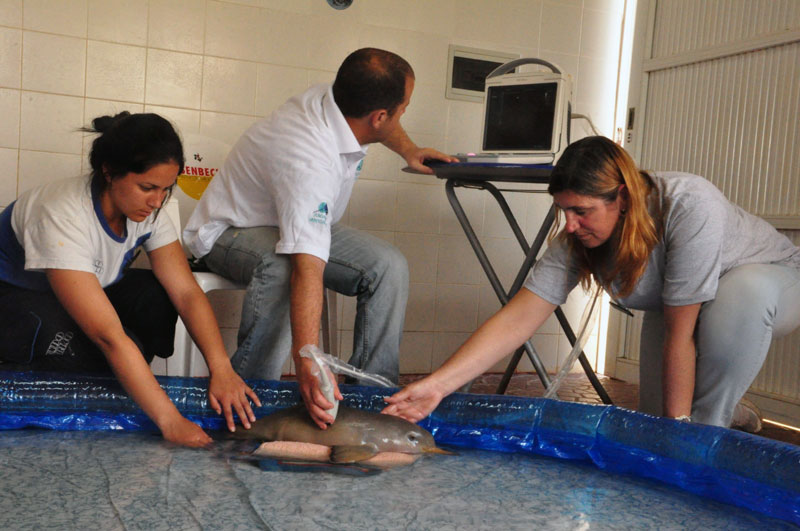
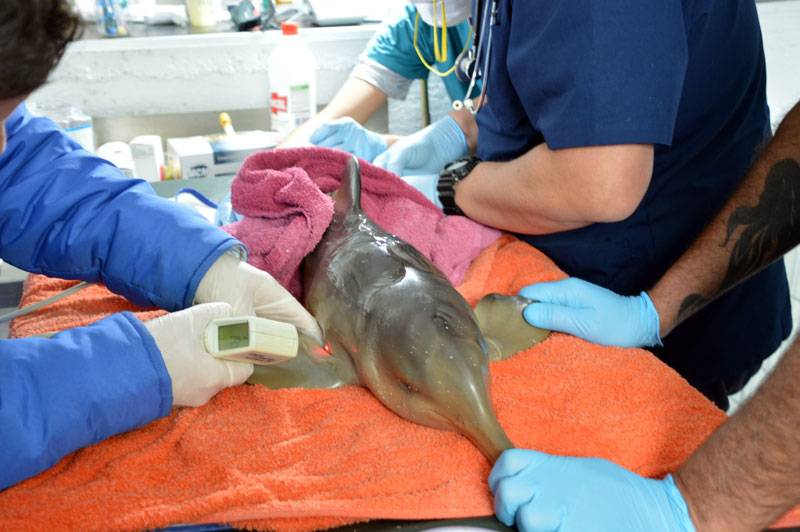
In the event of a live stranding, the animals are transported as quickly as possible to the nearest rehabilitation center in special boxes so that they can receive medical care and be examined. Initial examinations are carried out at the center and first aid is administered. The animals are cared for in special water basins equipped with high-quality filter systems, which is crucial for the survival of La Plata dolphins.
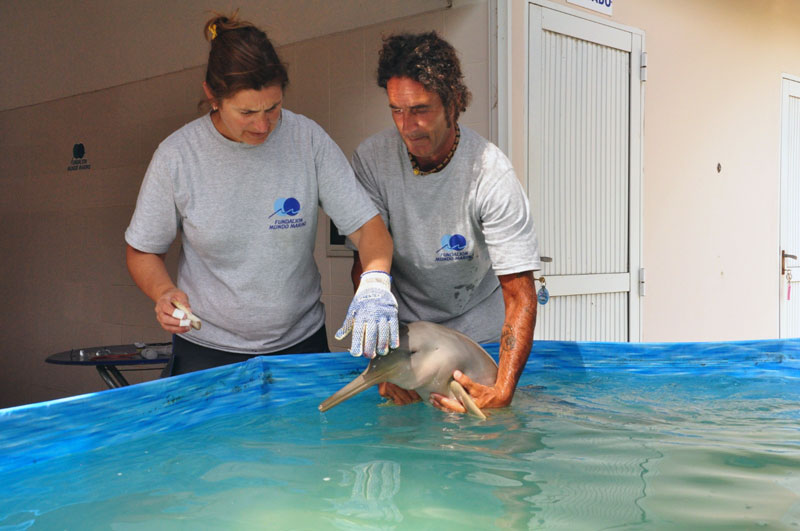
YAQU PACHA's goal is to provide the best possible care for the animals by supplying all necessary equipment, such as tanks and filter systems, transport boxes, milk, medication, and other items.
You can support us with our WISH LIST with your targeted animal welfare donations.
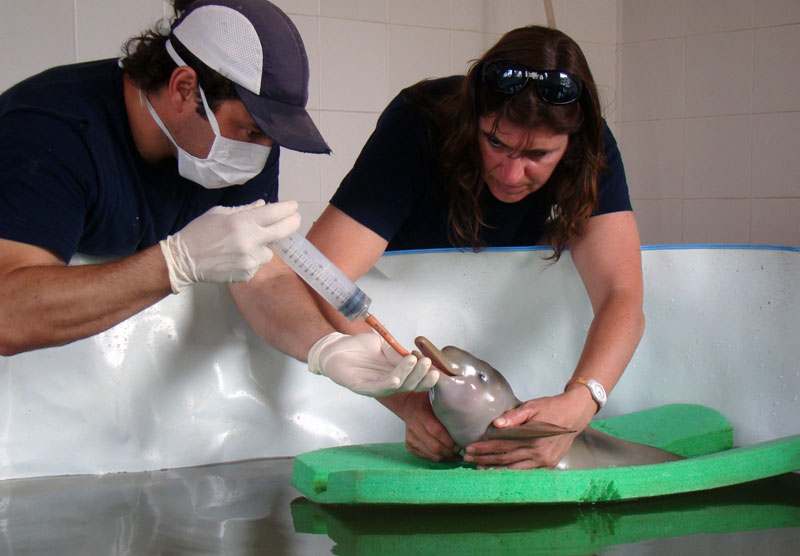
The rescued dolphins are monitored around the clock, given medication if necessary, and fed special milk at regular intervals. In the case of small whales, a very special milk is required, which is produced exclusively in the USA as powdered milk.
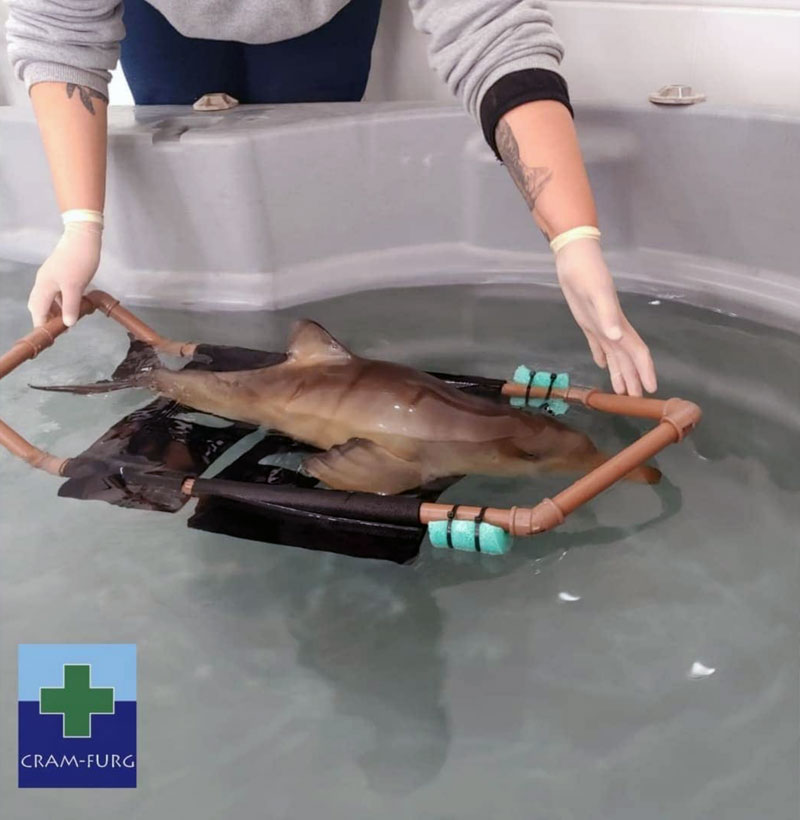
It is well known that this product has been used successfully in many countries to hand-rear and rehabilitate several newborn small whales. These products are currently not available in South America. The milk replacers available there contain ingredients such as soy and excessive carbohydrates, which the animals cannot digest and therefore cannot tolerate.
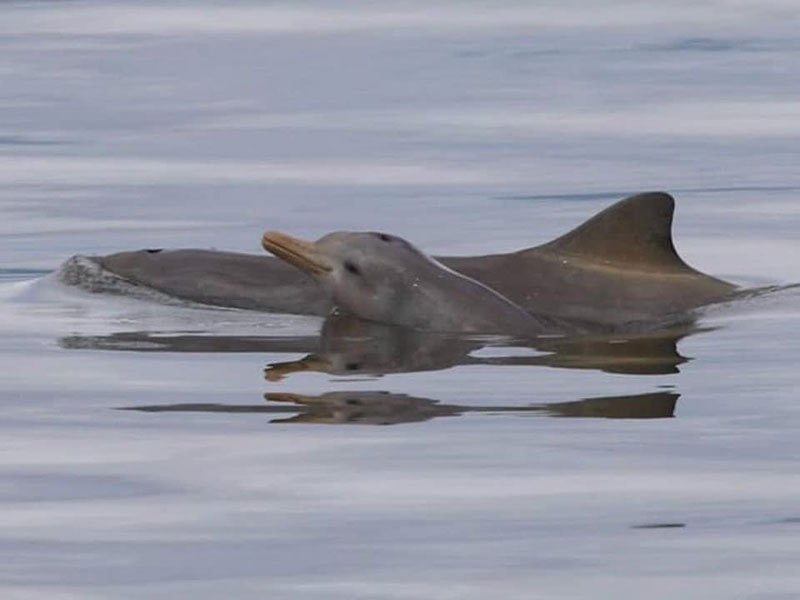
Rehabilitated newborns are certainly the greatest challenge for first responders because the initial stages of rehabilitation are complicated and because these animals rarely have contact with other animals of their species and must become accustomed to human care. Despite these difficulties, the ultimate goal in animal welfare for these rehabilitated animals should be a life in a natural or semi-natural habitat.
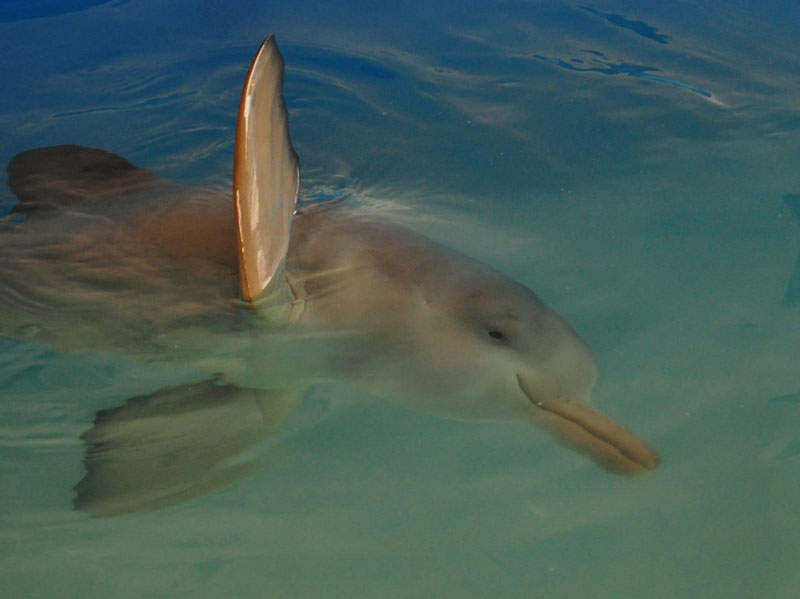
This work in animal welfare is not only important for saving individual dolphins, but also helps us to better understand these animals and improve our work in the field of animal welfare and species conservation.
Please support us in this very important project of animal welfare for species conservation with your donations.
Alliance for Franciscana Dolphin Conservation Research, Rescue, and Rehabilitation (AFC3R)

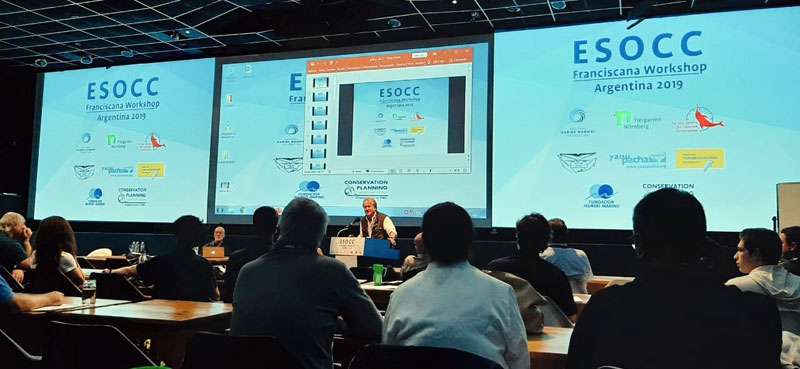
The Alliance for Franciscana Dolphin Conservation Research, Rescue and Rehabilitation (AFC3R) was founded in 2019 following the ESOCC Franciscana Workshop in Argentina and in response to the high number of live strandings of La Plata dolphins (Pontoporia blainvillei) in South America. Over the past 20 years, this number has exceeded 133 animals, although these figures only refer to a small part of the total distribution area.
Due to its preference for coastal waters, this species is particularly vulnerable to anthropogenic influences, especially to incidental mortality, primarily in gillnet fisheries. Although the exact figures for Franciscana bycatch across its entire range are not yet known, the high annual mortality rates calculated for some areas suggest that bycatch levels are unsustainable. As the La Plata dolphin is threatened with extinction in some regions, it is classified as "endangered" worldwide by the IUCN. At the regional level, such as in Brazil, it is classified as critically endangered.
The alliance comprises more than 27 experts, including veterinarians, biologists, and rehabilitation specialists, all of whom have many years of experience working with small whales. The participants in this alliance come from Brazil, Uruguay, Argentina, the USA, and Germany and represent various institutions.
The main objective of the group is to develop rehabilitation protocols for stranded La Plata dolphins that follow strict scientific criteria but are also based on management knowledge. All South American colleagues have worked in rehabilitation centers in their home countries for many years and have a wide range of expertise in this field. The protocols were developed in a step-by-step, collaborative process based on local and species-specific expertise as well as expertise gained from working with other small cetaceans. The first protocols were partially applied during the 2020 stranding season, when three stranded La Plata dolphins were found in Argentina and Brazil. This practical application during protocol development not only helped to test the protocol for its applicability, but also to improve it. The development of the protocol also included the standardization of data collection for live and dead animals, so that data gaps could be filled by each stranded animal. During the development of the protocols, it also became clear that it is not enough to define the different phases of rehabilitation, but that it is also immensely important to specify the material requirements that are ultimately necessary for successful work. Therefore, another task of the alliance is to ensure that rehabilitation centers in South America are equipped with the necessary materials/medications for the welfare of the dolphins.
In the future, these protocols will serve as "living documents" that will be regularly updated as experience is gained from individual rehabilitation measures. In addition, the protocols will also serve as a model for future conservation measures for other dolphin species around the world facing similar problems.
Finally, through its activities, the alliance aims to raise awareness of the need to protect this endangered species of dolphin.
Members of the alliance:
YAQU PACHA e.V., Germany
Nuremberg Zoo, Germany
National Marine Mammal Foundation, USA (NMMF)
Dolphin Quest, USA
Fundación Mundo Marino, Argentina
Mundo Marino, Argentina
Aquarium, Argentina
Aqua Marina, Argentina
Karumbé, Uruguay
Yaqu Pacha Uruguay, Uruguay
Marine Animal Recovery Center (CRAM–FURG), Brazil
AIUKA, Brazil
Associação R3 Animal, Brazil
University of São Paulo, Brazil
Our partners | La Plata Dolphin Project | La Plata Dolphin | Animal species protected by YAQU PACHA | Aerial surveys – Your donation counts | Species conservation | Sea otters | Vaquita Project | Support us